
Kleptomania: A Thief’s Dilemma

Let’s assume that the impulsive stealing of this hypothetical kleptomaniac is, as DSM-5 criteria requires, entirely ego-dystonic. For years they’ve been trying repeatedly to refrain from stealing, some periods of success but always inevitably lapsing and causing themselves significant legal, social and psychological stress. By now much of their daily existence centres around the tormenting thought “am I going to steal again?”
Logic puzzle fans may have already spotted the problem with this question.
Ultimately, it is a question that can only ever be answered in the affirmative. Not stealing only serves to kick the can of potential stealing further down the road, theoretically forever. Only the commission (and never the omission) of stealing can logically ever put this question to rest. At least until the next escalation of obsessive urge builds and again triggers the kleptomaniacs dilemma.
It’s probably a good time to mention that I’ve never treated or, to my knowledge, ever met a person experiencing diagnostic level kleptomania. But I have seen the above dilemma apply in variations of gambling, drugs and paraphilia. I’m not claiming to say anything original or wholly important, but it is possible that this one cognition (“am I ever going to X again?”) and the logic-trap-determinism that ensues, is doing much of the heavy lifting across many compulsion problems.
These are some of the things I’ve heard clients say:
“I’m exhausted from not gambling, I need a night off.”
“I stayed up all night without lapsing, but now I haven’t slept and can’t function – being clean is ruining my life.”
“In the end I used just so that I could stop thinking about it.”
“I drunk as soon as I got home because I needed another day off.”
The weight of the dilemma can be enormous and like a type of learned helplessness, each experience of failure diminishes confidence and adds to a sense of inevitability that puts relapse on a hair-trigger.
“There’s no point, once I start thinking this way, I always end up using.”
Or like a surrounded gunslinger who goes out in a blaze-of-glory.
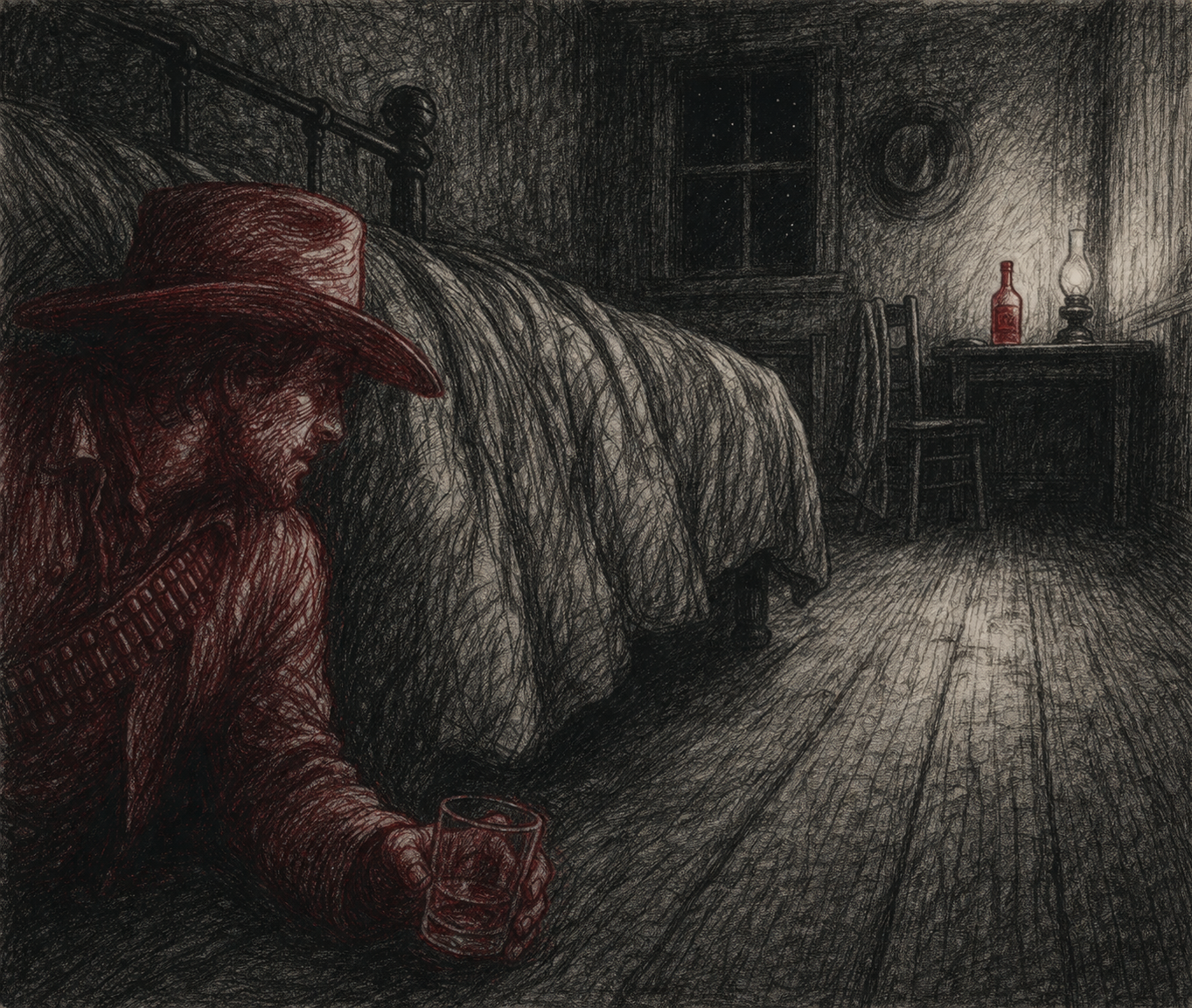
“The Kid aint waiting around all night for that bastard to come drink me”
The problem with the kleptomaniac’s dilemma isn’t its conclusion, but like Zeno’s arrow infinitely halving its distance towards a target and therefore logically never arriving, the situation has been phrased stupidly from the start.
We can’t know with certainty that we won’t steal one day. But we also don’t know with 100% certainty that we’ll never kill, commit infidelity, step foot on the moon or become clowns, but none of these potentials typically become a source of obsession.
Most psychological problems aren’t actually problems until they become associated with behaviour and then we can mistakenly search for a solution in the behaviour rather than the psychological state that preceded it. The problem here is the urge and a better question would be “am I always going to have urges to steal (gamble/drink/use)?”
This also can’t be conclusively answered, but it does give us something more nuanced to focus on. As well as being in a constant state of impermanence (if we notice), urges are constantly changing in their frequency, potency and duration and each of these can be tracked. A classic, CBT-esque self-monitoring sheet is good here. Observation creates distance, 'it' becomes a thing outside of ourselves rather than something we are fused with.
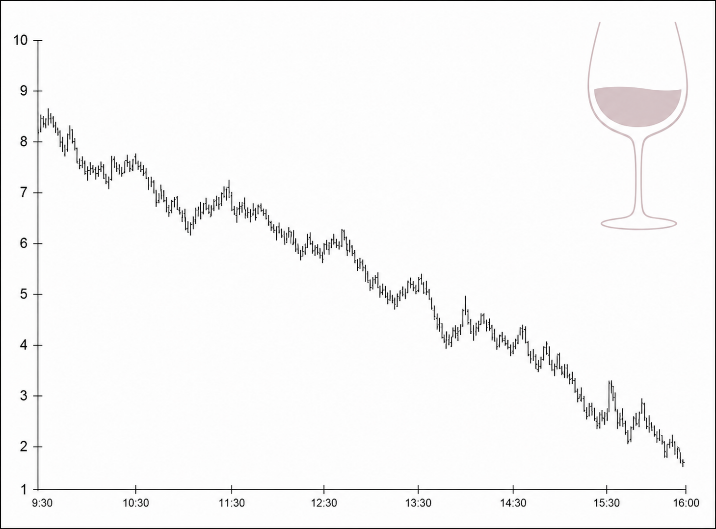
A problem drinker, via CBT worksheet, briefly becomes one with the universe.
It’s going well when curious observations about urges can be made in real-time:
“Oh, wait, *this* is an 8/10 urge, last week was actually just a 6.”
“Woah, this one is massive. Maybe a new PB.”
At this point a person has (at least momentarily) transcended their compulsion. This is why I am convinced that often the simple interventions are the best ones and also why I’ve never understood the supposed distinction between CBT and third wave therapies. Zeno’s paradox is the mistake of taking discrete snapshots as a 1:1 representation of the continuous passage of time. The kleptomaniac’s dilemma is the mistake of collapsing the complexity of unfolding psychology into a single dichotomous outcome (“will I? / won’t I?”). Much of the places we become stuck probably amount to similar types of false premise.
Ned Dickeson is a clinical psychologist based in Adelaide, Australia.
This is a short essay and not intended as an adequate explanation for an evidence-based treatment approach, especially given all the nuances that each individual experiences.
I have used AI for artwork, research and proofreading but not for ideas or prose .
