
Teaching Executive Functioning to Children: 6 Games
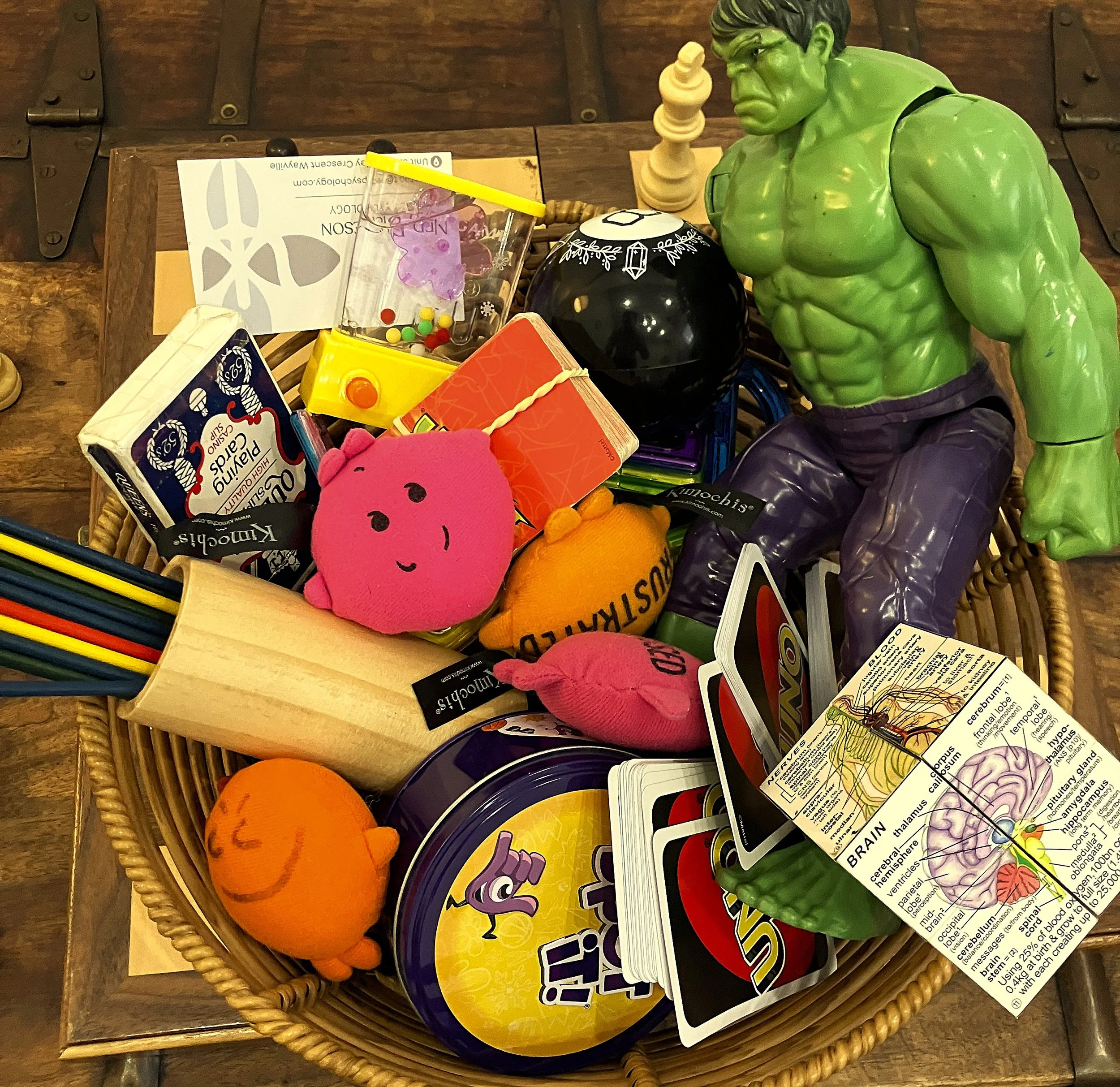
The following games are ones I use in session with younger clients, roughly ages five to twelve, who are struggling with executive functioning and often presenting with ADHD or autism spectrum disorder. All games align with the trichotillomania treatment protocol, and aim to be hands-on, require no special equipment, and be metaphorically simple.
A few caveats.
1. There is reasonable evidence that executive functioning can be improved through structured practice (Birtwistle et al., 2025). The effects are modest but robust. That said, don’t oversell these to parents. In many cases, what you are really delivering is a set of useful metaphors that can build self-awareness and support the gradual, top-down development of executive functioning over time.
2. Debrief after every activity. The key question, borrowed from Dr David D Nowell, is: "How exactly did you do that?" to promote the self-awareness that allows children to begin deliberately improving these skills. It’s also useful to take turns doing the activities so clinicians can model giving a description of their own executive functioning process.
3. Several of these activities involve mild physical excitement (throwing things, roughhousing). Keep parents involved so they can provide consent and are able to see and understand each game so that they can facilitate the homework version.
What Is Executive Functioning?
Executive functioning is the part of the brain in charge of everything else. If a person is a kingdom, executive functioning is the royal court - the monarchs, knights, stewards and advisors who sit at the round table and decide how to run things.
When executive functioning breaks down, it looks like a royal court where nobody shows up or else does so drunk. The kingdom runs out of food, the aqueduct doesn't get built, barbarians invade.
1. Switching Tasks
What it is: Being able to transition quickly and respond to new environments and demands.
What it looks like when it's hard: Tantrums when plans change. Reluctance to engage in unpredictable situations. Rigidity.
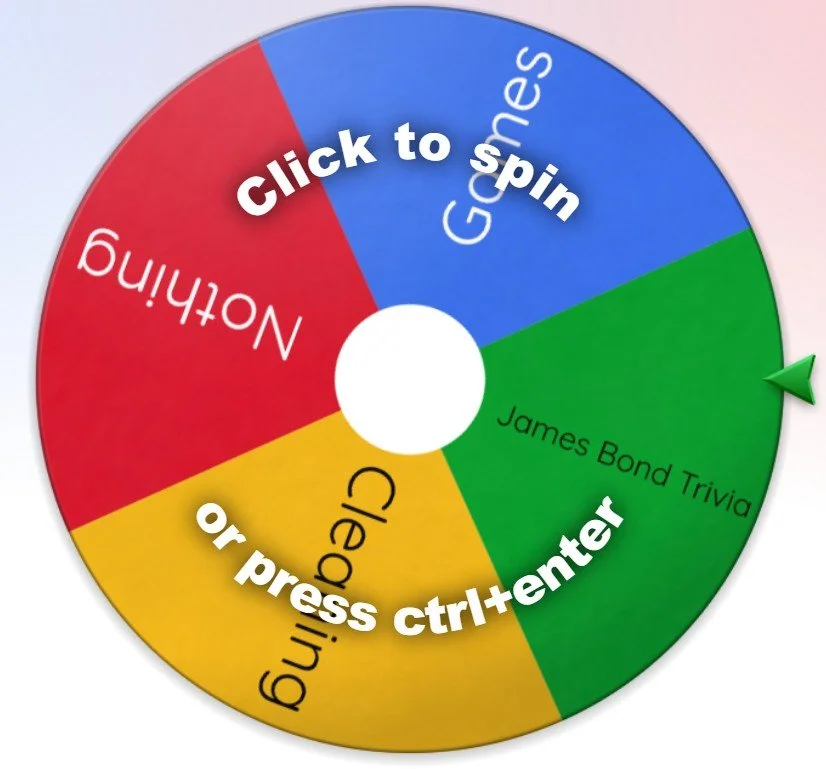
In session: Use an online random wheel with a mix of activities assigned to each segment. Some should be fun (games, drawing, building). Some less fun (sitting quietly, cleaning, maths problem). Spin the wheel. Do that activity for an allocated time. When the timer goes, stop immediately (mid-sentence, mid-move, mid-anything) and spin again. The point is the repeated stopping and not-knowing. You might land on the same unpleasant task repeatedly. You might have to stop a fun task mid-absorption.
Homework: The "Surprise Me" game. An agreed number of times during the coming week, the child has to say "surprise me" when a parent asks a preference question; what do you want for breakfast? where should we go? what should we do? and practise leaning into uncertainty.
2. Self-Monitoring
What it is: Being able to accurately identify and name your own emotional states.
What it looks like when it's hard: Someone who doesn’t know what they are feeling, and so communicates by action instead - slamming doors, going quiet, melting down.

In session:Therapeutic UNO. Assign the four main emotions to each colour: yellow is happy or excited, red is angry, blue is sad, green is anxious or scared. The game plays as normal, but each time a card is placed, the player has to talk about that card's emotion; what triggers it for them, what they do when they feel it, what helps when there is too much of it. The value here is twofold: the child gets to think about their internal states at a calm, non-loaded moment, while also having a chance to hear about (and understand) other peoples emotional experiences.
Homework:A brief daily journal. Pick one emotion. At the end of each day, the child (with parent) scores that emotion for that day from one to ten, and names up to three things that triggered it.
3. Impulse Control
What it is: Stopping yourself from doing something tempting (or automatic) when the consequences are bad.
What it looks like when it's hard: Blurting out in class. Getting into trouble. Annoying people.
In session: Watch the marshmallow video. Briefly describe the longitudinal outcomes (the children who refrained from eating the marshmallow later showed, on average, better outcomes in academic achievement, behavioural regulation, social competence and physical health indicators).

Then play Spot It. The therapist plays while the child watches and has to sit on their urge to call out the answer when they see the match first. Track the internal experience; how strong is the urge, on a scale of one to ten? Take turns. Debrief. What did it feel like to hold it in? What helped? How exactly did you do that?
Homework: Give the child a small box of smarties at the end of the session. They have to carry it with them and bring it back to the next session unopened.
4. Focus and Concentration
What it is: Sustained attention to a task over time.
What it looks like when it's hard: Always drifting. Forgetting things. Tasks left half-finished.

In session: Solo Blink. The child works through the card game alone, trying to complete the full deck as fast as possible. While they play, the clinician does everything within reason to break their concentration; play music loudly, talk at them, move things around the room. Debrief. Then swap. Have the child try to distract while the clinician plays.
Homework: Repeat at home, but this time the child does actual school homework while the parents try (gently) to distract them.
5. Organisation
What it is: Keeping track of objects in space and managing physical environments.
What it looks like when it's hard: Messy room/bag. Always losing things.
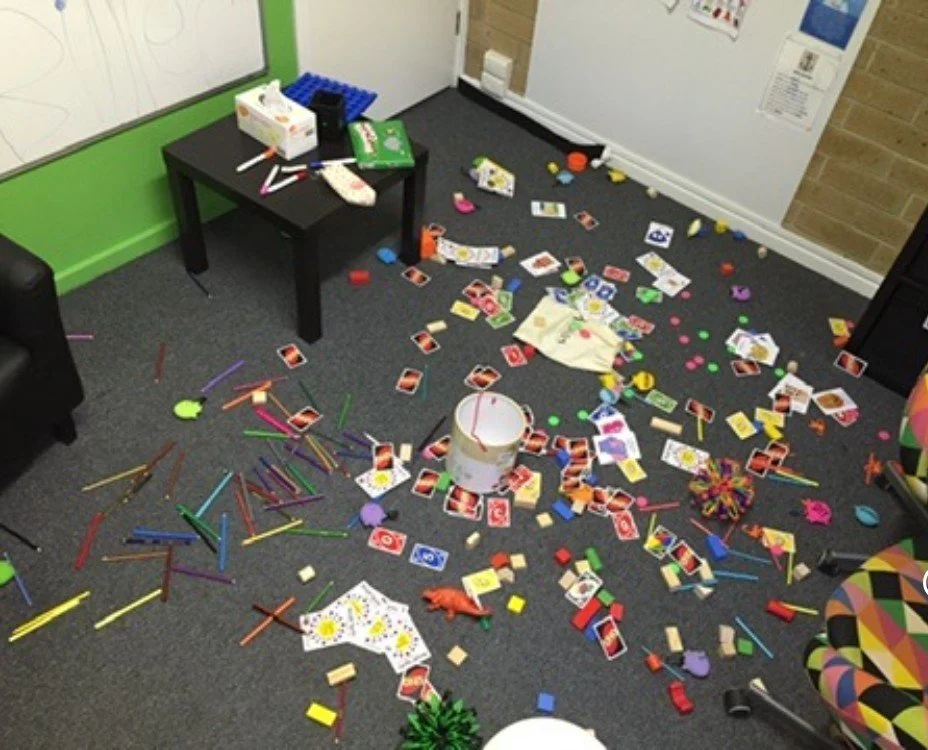
In session: Clinician and client trash the therapy room together. Throw all therapy equipment around room, tip furniture, make a genuine mess. Then, go to the whiteboard and make a plan. Delegate tasks. Decide on an order. Work out a strategy (pushing everything into one central pile first, sorting larger items before smaller ones, choosing some music to work to). Then execute the plan. The point is that if organisation is not instinctive, it can be developed as a skill by planning before acting.
Homework: Repeat at home with the child's own bedroom, with parents present.
6. Emotional Control
What it is: Being able to behaviourally override heightened emotional arousal, especially anger and excitement.
What it looks like when it's hard: Getting in trouble. Hurting others. Risky behaviour in moments of high emotion.
In session: Tear up A4 paper into halves, scrunch into balls. Push two couches to face each other. Parent keeps time. Thirty seconds of clinician Vs client snowball fight. When the timer stops, the goal is to return to baseline as fast as possible using breathing, muscle relaxation, or distraction. A new round cannot start until the parent reckons both players are calm again.
Homework: Repeat at home using whatever rough-and-tumble play the family already enjoys.
(NB: crucially warn parents against trying to reactively remind children of regulation skills in any future moment of emotional dysregulation)
Initiation and Planning
Two components of executive functioning are not covered in this post; initiation (getting yourself to start necessary tasks despite not wanting to) and planning and prioritising (deciding what matters and in what order). These will be covered together in a future post.
—————————
Ned Dickeson is a clinical psychologist based in Adelaide, Australia.
This is a short essay and not intended as an adequate explanation for an evidence-based treatment approach, especially given all the nuances that each individual experiences.
I have used AI for artwork and proofreading but not for ideas or prose.
—————————--
Birtwistle, E., Chernikova, O., Wünsch, M., & Niklas, F. (2025). Training of Executive Functions in Children: A meta-analysis of cognitive training interventions. SAGE Open, 15(1).
